
While a 2030 goal may, for a while now, have seemed like a distant future deadline, it's now close enough that it should be shaping your actions.
The ZEV Mandate is already pushing the UK vehicle market towards zero-emission adoption, with 80% of new cars and 70% of new vans sold in Great Britain required to be zero emission by 2030. For businesses moving goods across road, sea and air, this should be on your radar and part of your action plan.
Why one fuel cannot solve freight decarbonisation
A practical multi fuel strategy is now essential for businesses that want to reduce emissions without weakening service levels or operational resilience.
Freight has never been a single problem; it’s always taken multiple forms, whether that be a local delivery, a heavy UK road leg, a sea freight movement, an air freight consignment or a final-mile delivery. Whether required individually or as a combined movement, these stretches all place different demands on fuel, range, payload and infrastructure.
It’s for this reason that the future of net zero shipping can’t depend on just one freight solution. While electric vehicles seem to be the focus for many businesses, they’re not the only element that needs to be considered. They certainly have an important role, but they won’t be the right answer for every route.
The businesses that adapt best will be those that understand how to combine multi fuels intelligently. They’ll choose the most appropriate solution for each stage of the journey, whether that be an electric fleet, using renewable biomethane fuel, or leaning into the hydrogen solutions that are beginning to appear on the horizon. Ultimately, each transport decision needs to be correctly matched to the route, cargo, deadline and carbon impact.
What should a future-ready multi-fuel strategy include?
Electric for zero-emission road operations
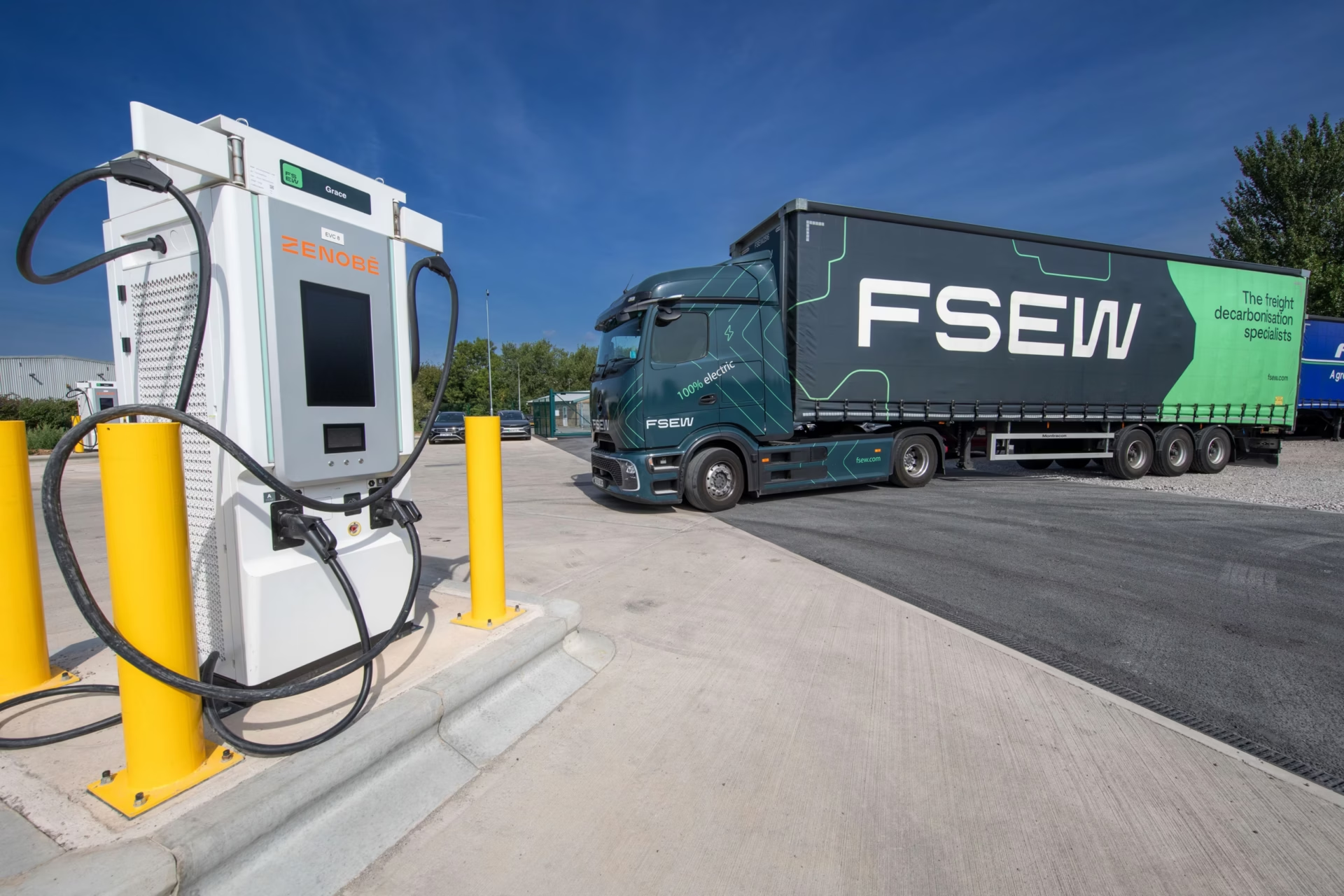
Electric freight is already becoming a reality for many businesses. For suitable road routes, particularly predictable regional movements and depot-based operations, electric HGVs can make a measurable difference.
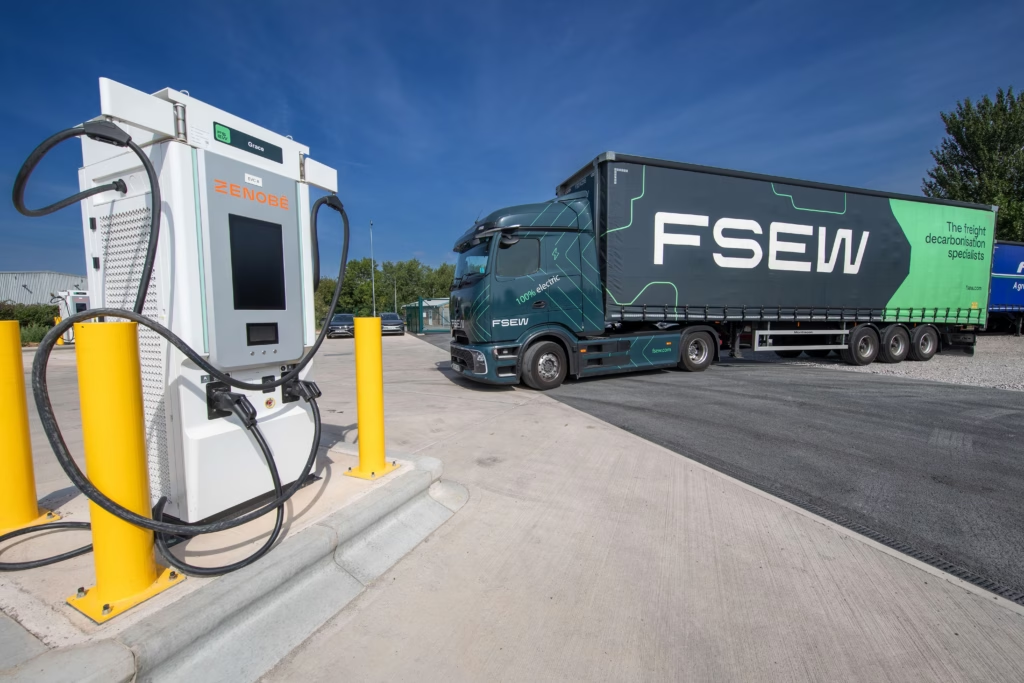
At FSEW, we’ve already invested in fully electric heavy freight trucks, helping our customers to reduce their transport-related emissions wherever possible. These zero-emission vehicles are especially valuable where businesses need cleaner road freight without compromising elsewhere; these are still 37 tonne, 4×2 class 1 trucks that can reliably transport your goods. 6×2 class 1 trucks will be available in the coming months for those carrying heavier cargos.
Electric will be central to zero emission shipping strategies, particularly for shorter or repeated legs where charging can be planned effectively.
Biomethane for heavier road legs
Some freight movements are harder to electrify today, such as routes that involve longer distances, heavier loads, tight schedules and charging constraints. These can all make full electrification more difficult, but that’s where biomethane fuel comes in as an alternative option.
As part of a multi fuel approach, renewable biomethane can support lower-carbon heavy road freight while infrastructure and vehicle technology continue to develop for full net-zero. Biomethane fuel is sourced from waste such as food, water, and animal waste, giving those materials a new purpose while reducing the need for additional diesel to be sourced.
Hydrogen for future air and sea opportunities
Air and sea freight are among the most difficult areas to decarbonise, as their scale, energy demand and international infrastructure requirements make the transition a bit more complex.
Part of the solution is likely to come from hydrogen and hydrogen-derived fuels, particularly for sectors where battery-electric technology is less practical. While the large-scale commercial use for this is still in development, it’s promising for these longer-haul journeys.
It’s also worth noting that the 2030 government target doesn’t include air and sea travel, but try not to use this as an excuse not to act! A credible zero carbon shipping roadmap should reduce emissions using the solutions that are already available while also preparing for the fuels and technologies that will shape future freight.
Why multi-fuel shipping is also a resilience issue
Decarbonisation is often treated as an environmental challenge, but it’s also a concern that regards commercial risk. By relying on one fuel, route or transport mode, businesses can leave themselves exposed to infrastructure delays, fuel volatility, and regulatory changes. Choosing a multi fuel supplier or strategic freight partner gives you significantly more flexibility. The right partner can assess each shipment, consider the available modes, and recommend a transport mix that balances carbon reduction with cost, reliability and speed. With services like GreenFlow reporting, green freight use can also lead you into receiving significantly clearer carbon reporting.
How businesses can start adapting before 2030
The first step is to understand how your goods are already moving. If you’re able to map your freight by mode, mileage, emissions, cost and delivery requirement, you can identify where low-carbon alternatives can already make a difference.
From there, procurement teams should build more flexibility into logistics briefs. Instead of asking only for the cheapest route, ask suppliers about electric capacity, biomethane options, multimodal freight, emissions reporting and future fuel planning that can help you reach your sustainability goals. Having the right data can make this significantly easier. At FSEW, our GreenFlow framework helps businesses measure their exact freight emission, and therefore identify reduction opportunities. This is where shipping net zero can become a practical, measurable plan rather than a statement of intent.
Building the 2030 roadmap with FSEW
If your business is claiming that it plans to reach net-zero by 2030, you need to acknowledge that the best approach is not one of single-fuel. Your freight will require electric where it works now, biomethane for harder road legs, as well as smart use of multimodal freight and preparedness for the future use of hydrogen across air and sea.
If you’re serious about net zero shipping, you’ll need to start building that roadmap now (if you haven’t already). At FSEW, we work with our customers to make freight decarbonisation practical, measurable and commercially realistic. Through electric HGVs and biomethane fuel, multimodal freight and GreenFlow reporting, we can help you reduce emissions while keeping your goods moving.
Get in touch with us to build a freight decarbonisation strategy that’s ready for 2030 and beyond.