
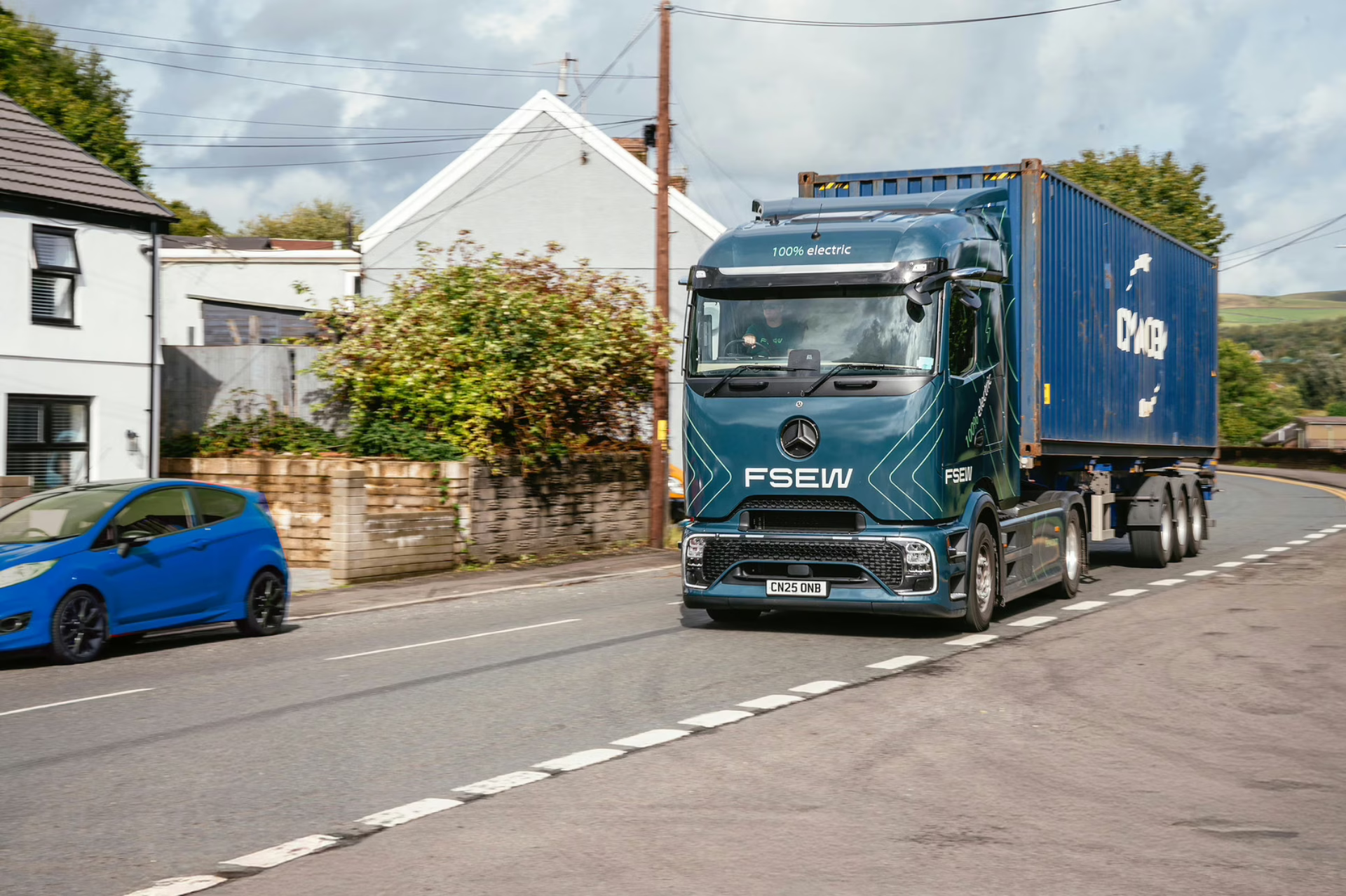
Freight decarbonisation used to sit in the category of being a nice-to-have, but for most businesses, it was rarely a priority.
Today, organisations are increasingly judged on their supply chain credibility, not just their product, and freight decarbonisation is becoming a board-level game changer as a result.
Instead of asking “how much will this cost?”, the conversation is shifting to “what’s the ROI of ESG?”, and the answer is that when done right it’s high. If you can reduce freight emissions earlier than your competitors and prove it with consistent reporting, you become easier to choose, faster to approve, and safer to buy from in the eyes of your customer.
The ROI of ESG: Why early freight decarbonisation creates commercial leverage
At a C-suite level, ESG only becomes strategic when it affects revenue, risk, and valuation, but freight decarbonisation now touches all of these elements.
Early movers in freight decarbonisation gain leverage because:
· Procurement is tightening qualification requirements. They’re now screening for credible evidence, not just loose statements.
· Customers need proof. If your business is B2B, your customers will want can use your figures in their own reporting and communications, especially where delivery is visible to end consumers.
· Investors and auditors are raising the bar. Substantiation and consistency are incredibly important, particularly under the new 10% greenwashing penalty fines, making weak data a real exposure.
· Talent is more sceptical of generic claims. If you’re looking to hire, remember that applicants are more attracted to businesses that can show meaningful, verifiable progress.
What are the risks when it comes to procurement?
Across the UK, procurement expectations have moved beyond aspirational policy statements. Carbon reduction planning and evidence increasingly sit inside tender requirements, particularly when it comes to high-value work.
From a board perspective, the cost of putting this off often shows up as:
· Disqualification risk (you fail a minimum requirement or can’t supply evidence on time)
· Delayed revenue (extra diligence, more back-and-forth, slower approvals)
· Higher cost of compliance (last-minute reporting projects and rushed supplier changes)
· Commercial constraint (your sales team avoids making sustainability-led claims because they can’t back them up)
Early freight decarbonisation reduces friction in procurement because you can respond quickly with clear, defensible data. For directors, this is a strategic shift: sustainability evidence is now an important part of the go-to-market engine.
The enterprise value of a green supply chain
‘Enterprise value of green supply chain’ can sound abstract, until you map it to real business outcomes. Being first in freight decarbonisation strengthens your enterprise value in two key places: customer demand, and capital confidence.
Win the customer: B2B2C pressure makes freight evidence commercially useful
Even when you’re selling B2B, your customer may be selling to the public. That B2B2C reality is why delivery emissions (and delivery claims) get scrutinised so heavily.
Early investors in freight decarbonisation come out ahead, because they can offer:
· Verified reporting inputs that customers can use in their own sustainability reporting and tenders
· A stronger ‘why us’ story in renewals, negotiations, and ‘about us’ pages. Providing proof will always beat empty promises
· Reduced reputational risk for customers who need to defend supply chain claims publicly
In other words, early freight decarbonisation helps you become the supplier that removes anxiety.
Win the investor: confidence beats green-hushing
A growing number of businesses are green-hushing (staying quiet about sustainability progress), because they’re afraid of being scrutinised, or can’t fully substantiate claims.
That silence can create its own problem by signalling inaction, uncertainty, and/or risk. By being first to freight decarbonisation, early movers can communicate with confidence, because their reporting is structured and repeatable.
Investor confidence is strengthened by organisations that can show consistency over time, traceable figures, and a credible improvement pathway that demonstrates measurable progress.
If you operate in EU-facing supply chains, you’ll also feel the pull from more formal sustainability reporting expectations and assurance pressures. In that environment, early freight decarbonisation is less about “nice narratives” and more about de-risking scrutiny.
Turn ESG compliance into a sales asset with verifiable claims
The commercial unlock isn’t just through decarbonisation alone. You need to provide the proof, and doing so can be a huge sales asset to your business:
1. Define what you can claim safely
Replace vague language (‘green delivery’) with clear, limited statements tied to scope and coverage (‘diesel-free deliveries on X lanes’, ‘reduced emissions on Y service’).
2. Build a repeatable reporting cadence
Quarterly or monthly reporting beats large annual projects. Sales teams need something current and reliable to work with.
3. Separate measured from modelled
The more your reporting relies on generic averages, the less usable it becomes commercially. Not only that, but it’s now a legal requirement to provide specific data on sustainability reporting. Clear labelling improves trust.
4. Treat freight evidence like financial reporting
Include statistics around controls, traceability, and consistent methodology. It doesn’t need to be complex, but it does have to be clearly defensible.
This is why the right freight partner matters. Partners who can provide auditable inputs and consistent outputs make it far easier for your teams to speak confidently without accidentally over-claiming.
A C-suite guide to sustainability in freight: what “being first” actually looks like
Being first to freight decarbonisation doesn’t mean you have to rush a perfect transformation overnight. Start by creating a practical, board-supported plan that delivers commercial outcomes early. For C-suite members, the freight sustainability guide would look like the following:
1) Start where it’s material
Identify the lanes, customers, or regions where freight emissions and customer scrutiny are highest. That’s where early changes can translate into commercial value fastest.
2) Set a minimum evidence standard
Agree the evidence threshold required for any external transport claim. This might include documented methodology, ensuring coverage is stated (what’s included and excluded), and making sure that reporting can be repeated next quarter.
3) Build procurement requirements into freight contracts
Include reporting obligations as part of supplier selection and contract management. This might include data format and frequency, methodology transparency, audit trail availability, and an escalation path for missing data.
4) Create a claims governance process
Sustainability and legal should not be brought in after publication. Put a simple approval workflow in place for any transport claim that is quantified, comparative, or broad.
5) Invest in partners and systems that remove the internal burden
If your teams are spending weeks cleaning spreadsheets and chasing suppliers, ‘re lacking a strategic process. Early movers to freight decarbonisation choose partners like FSEW that make reporting an easy routine.
Why your freight partner determines speed: proof of practice beats theory
Many organisations want lower-carbon logistics, but it’s not so common to be able to deliver it at scale with evidence you can defend.
Your freight partner becomes a competitive advantage if you choose the right one. A partner who operates diesel-free solutions (where feasible) and can provide telematics-backed inputs changes the quality of your reporting overnight.
The first-mover advantage with FSEW
Freight decarbonisation is becoming a commercial differentiator because it sits at the intersection of procurement, reporting scrutiny, and brand trust. Early movers benefit in three ways:
· Eligibility: fewer tender barriers and disqualification risks
· Credibility: claims you can substantiate, not soften or avoid
· Speed: faster approvals, faster reporting, and faster sales enablement
If you want to create real enterprise value, get on board with freight decarbonisation and build towards verified reporting, not just good intentions. When the proof is there, you can speak confidently, sell confidently, and operate with less risk. GreenFlow is designed to make freight decarbonisation measurable and reportable, so your sustainability progress becomes a commercial.
Explore GreenFlow or get in touch today to find out how FSEW could be your perfect partner in freight decarbonisation.