
Recent global conflicts have put fresh pressure on oil and energy markets. As prices in the UK are set by international markets, we are not exempt from the current fluctuations, and this can create uncertainty for businesses who rely on large-scale freight transport. Thankfully, there's an alternative option that doesn't rely on these sources of fuel.
Freight forwarding fuel costs are part of your product cost
UK petrol and diesel prices are affected by a host of different variables, including the global price of crude oil, refinery capacity, the pound-to-dollar exchange rate, distribution costs, retailer margins, fuel duty and VAT. While some of those costs are fixed, others can move, and the fuel cost movement has recently been significant.
The Institute for Fiscal Studies reports that oil prices rose by 35% between 28 February and 12 March 2026, while wholesale gas prices rose by 67% over the same period. For businesses that depend on diesel-led transport, an increase this large can create a huge knock-on effect on their funding allocation.
When it comes to freight, fuel price uncertainty affects more than how much you pay at the pump. It also affects delivery pricing, tender decisions, customer promises and the actual overall cost of getting a product to market; fluctuating fuel prices make it hard to provide your service for the same internal cost consistently.
Sustainable freight forwarding gives you more predictable planning
Sustainable freight forwarding is often discussed in terms of carbon reporting, and while that’s important, it’s also not the only benefit.
A low-carbon freight model can also give you peace of mind with control over cost. If your freight partner is less exposed to petrol and diesel, your supply chain is less exposed to the worst of fuel volatility. This can give you a more consistent basis for planning than a diesel-only approach, as fluctuations in oil availability and fuel prices won’t have the same direct effect on your supply chain.
This has a threefold effect on different areas of your team:
· Budgeting is clearer for procurement teams
· Route planning and customer promises are easier to manage for logistics managers
· Freight has a clearer role in both cost control and carbon reduction.
At FSEW, our GreenFlow framework supports this wider freight decarbonisation work by helping you review your freight emissions, identify reduction opportunities, report Scope 3 data through low-carbon logistics, and ease your mind when fuel prices are uncertain.
FSEW: a low carbon freight forwarder with diesel-free freight transport
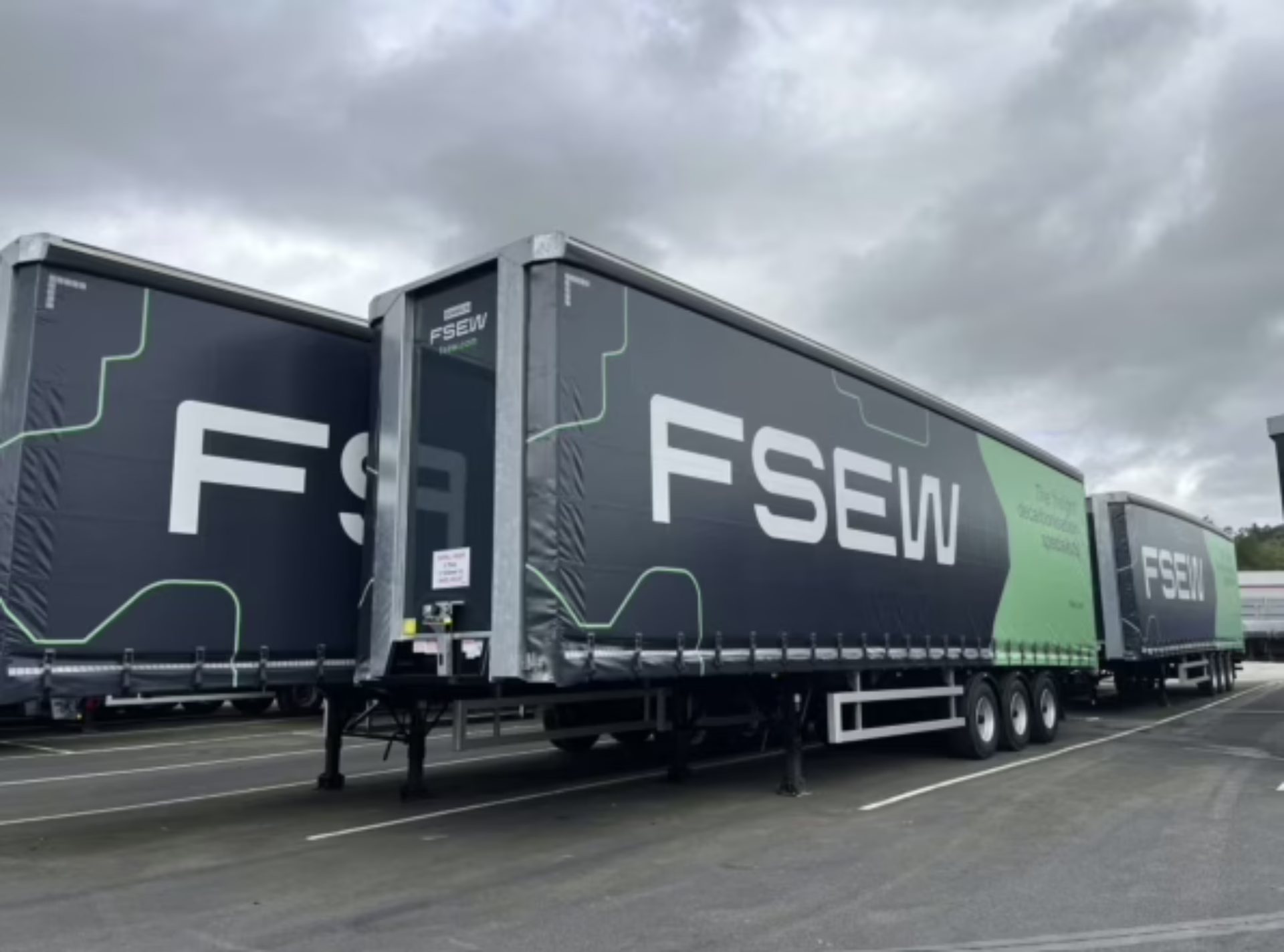
As of December 2024, we became a fully diesel-free freight operator, running a 40-strong road fleet powered by electric and biomethane CNG trucks. In doing so, our customers have an alternate option when diesel-led transport costs are difficult to predict.
Our electric HGV freight capability is already in use, not waiting on future infrastructure or trial projects. In fact, we launched the UK’s first commercially used fully electric heavy freight articulated trucks with Tesco, moving goods between Cardiff and Magor from January 2022.
As part of our low-carbon fleet, we also use biomethane freight transport, as these provide more than an 85% reduction in CO₂ emissions and up to 40% lifetime fuel cost saving from diesel.
Talk to FSEW about resilient supply chain logistics
Fuel markets will consistently move, but just how much it moves can be difficult to predict. What businesses can control, however, is the freight model they choose.
At FSEW, we help shippers build resilient supply chain logistics with lower exposure to diesel, verified emissions data, and practical low-carbon transport across electric and biomethane-powered road freight. If fuel price uncertainty is making your freight harder to plan, get in touch to plan a carbon-free freight solution that gives you more control over cost, carbon and delivery.